

Sales Leader France & Benelux. Responsible for IBM licensing and AEXIS solution sales, from initial scoping to licensing, renewals, and bundled software and services for the group.
For a long time, EPM and BI solutions evolved in separate ecosystems, driven by different use cases, teams and objectives. Financial planning and analytical reporting required distinct tools that were difficult to align. Today, this boundary is gradually fading. More mature organizations no longer seek to oppose EPM and BI, but to intelligently articulate them in order to connect planning, performance management and decision analytics.
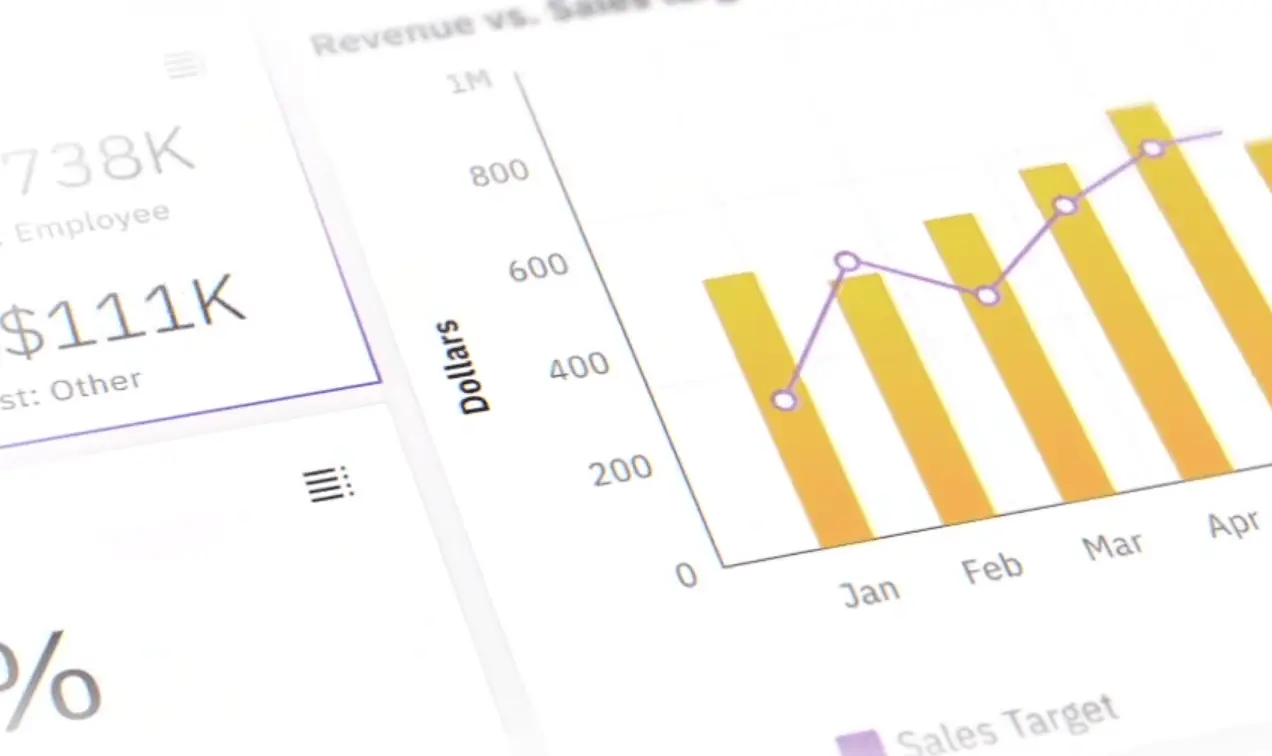
EPM and BI: converging needs, persistent confusion
EPM and BI are often confused because both manipulate financial and operational data. However, they are built on fundamentally different logics.
This confusion typically stems from a misunderstanding of their purposes: EPM structures future projections and decision-making, while BI analyzes and visualizes past and current performance.
EPM: steering the company's future performance
Enterprise Performance Management encompasses the processes and tools used to plan, budget, forecast and simulate financial and operational performance.
EPM solutions are designed to model scenarios, integrate business assumptions and structure collaborative data entry and validation processes. They form the foundation of forward-looking performance management and decision-making.
BI: analyzing and understanding realized performance
Business Intelligence focuses on the analysis, visualization and understanding of historical and current data.
BI tools excel at KPI reporting, data exploration and trend identification. They help decision-makers understand what happened and why, but they are not designed to structure planning or simulation processes.
Two complementary logics, not interchangeable
EPM and BI answer two different yet inseparable questions: what will happen, and what has happened.
Using BI tools for planning purposes or EPM tools to replace decision analytics generally leads to fragile, hard-to-maintain and poorly scalable solutions.
Articulating EPM and BI for end-to-end performance management
The most advanced organizations articulate their EPM and BI solutions around a consistent and governed data foundation.
EPM structures projection, simulation and decision-making, while BI explains, contextualizes and visualizes performance. Together, they enable end-to-end performance management, from strategy to execution.
Choosing the right approach based on business priorities
The choice between EPM and BI should not be binary. It depends on the organization's key priorities: forward-looking steering, performance analysis, governance or decision agility.
In a financial transformation context, advisory expertise plays a critical role in defining the target architecture and avoiding misuses or redundancies in a rapidly evolving EPM and BI market.
Tags
Last updated on May 18, 2026